
Installation
Get it right, first time
Our systems are designed to be simple to install, and we back that up with clear, practical support.
The videos on this page show each brace and hanger going in. Below them are the rated drawings, connection details and application sheets, all PDFs you can print or send to site. The drawings give the ratings, but which supports get braced, and at what spacing, is the project engineer’s job. Our engineering partners can do that work if you don’t have an engineer on the job already.
Installation videos
See how our V.LOCK brace solutions are installed on site. If you need additional installation details or project-specific support, our engineering partners can step in. Contact us and we’ll connect you with the right team.
How V.LOCK works
Fitting V.LOCK Seismic to trapeze
V.LOCK Suspension, cable tray
V.LOCK Seismic & Suspension
Fitting V.LOCK Seismic to ACU
Installation information
Seismic installation information & applications
Two sheets cover the brace arrangements themselves, one for 2 way transverse and one for 4 way transverse and longitudinal. The rest are connection details for whatever the brace arm lands on: a trapeze, a C purlin, or the structure. The alternate and elevated arm sheets are for trapezes where something is in the way of the standard arm position. Rod stiffening has its own sheet.
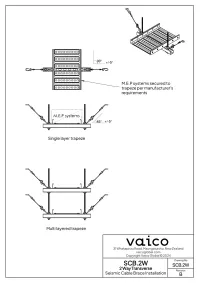 2 way transverse cable brace PDF · 986 KB · 1 page
 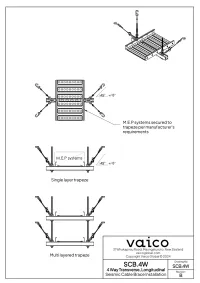 4 way transverse & longitudinal cable brace PDF · 407 KB · 1 page
 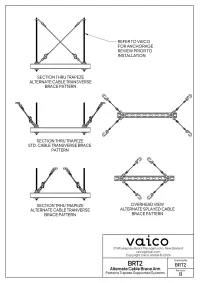 Alternate cable brace arm, trapeze PDF · 376 KB · 1 page
 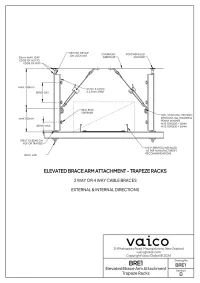 Elevated cable brace arm, trapeze PDF · 204 KB · 1 page
 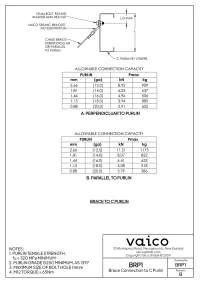 Brace connection to C purlin PDF · 194 KB · 1 page
 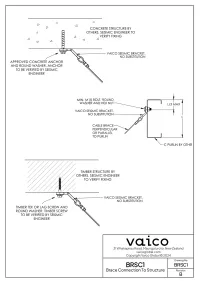 Brace connection to structure PDF · 226 KB · 1 page
 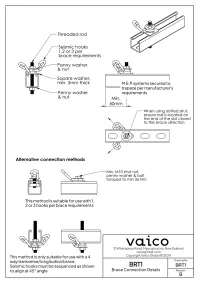 Brace connection to trapeze PDF · 231 KB · 1 page
 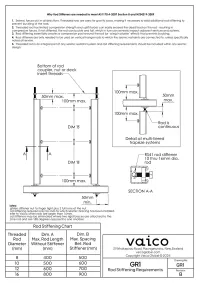 Rod stiffening details PDF · 918 KB · 1 page
 Suspension installation information
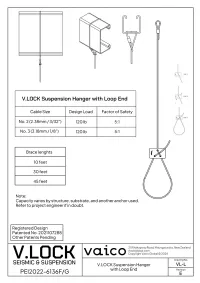
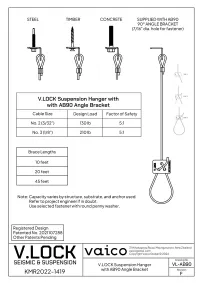
Two hanger details, one for each end type. Which one you need depends on what the hanger fixes to overhead: the loop end passes through, and the 90° angle bracket fixes flat against a soffit or steel.
General installation information
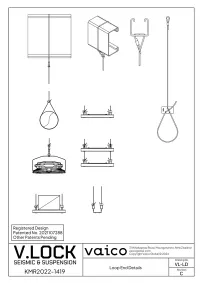
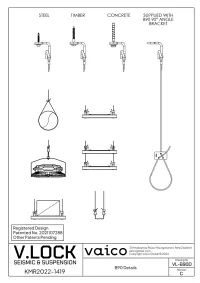
The application sheets show both end types in place on a range of services, so you can check an arrangement close to your own. The BPIR declaration is the product information New Zealand manufacturers publish under the Building Product Information Requirements.
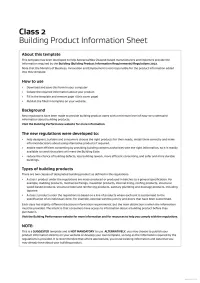
Those requirements are set by the Ministry of Business, Innovation and Employment, and Building Performance explains what a manufacturer has to publish. If you can’t find the information you’re looking for, reach out, we’re happy to chat through what you need. Contact us.